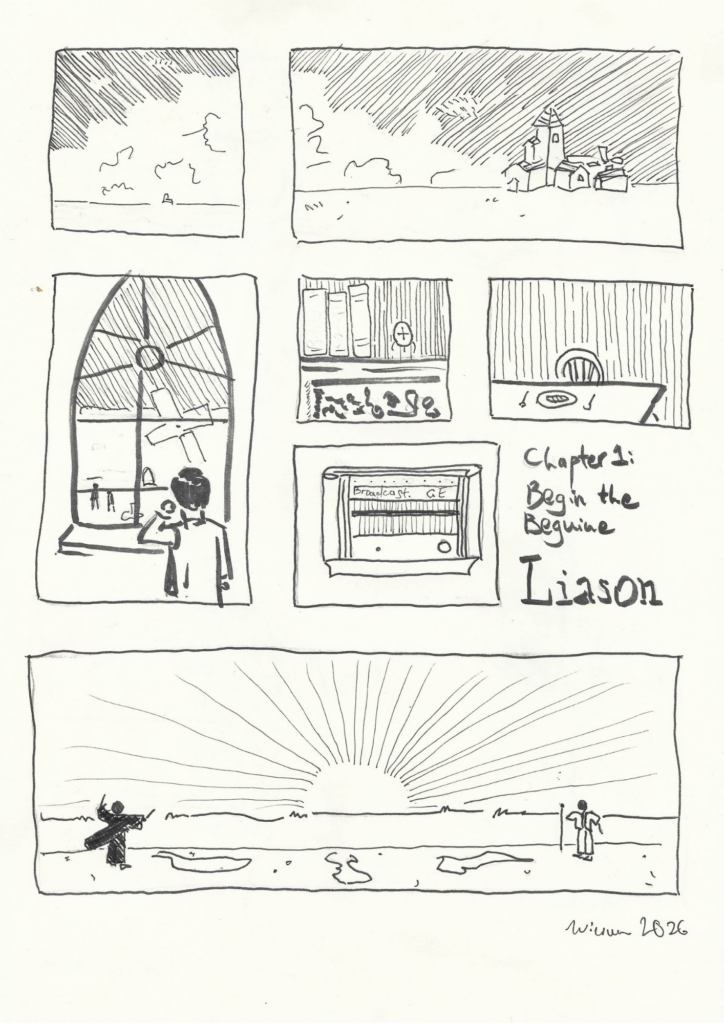
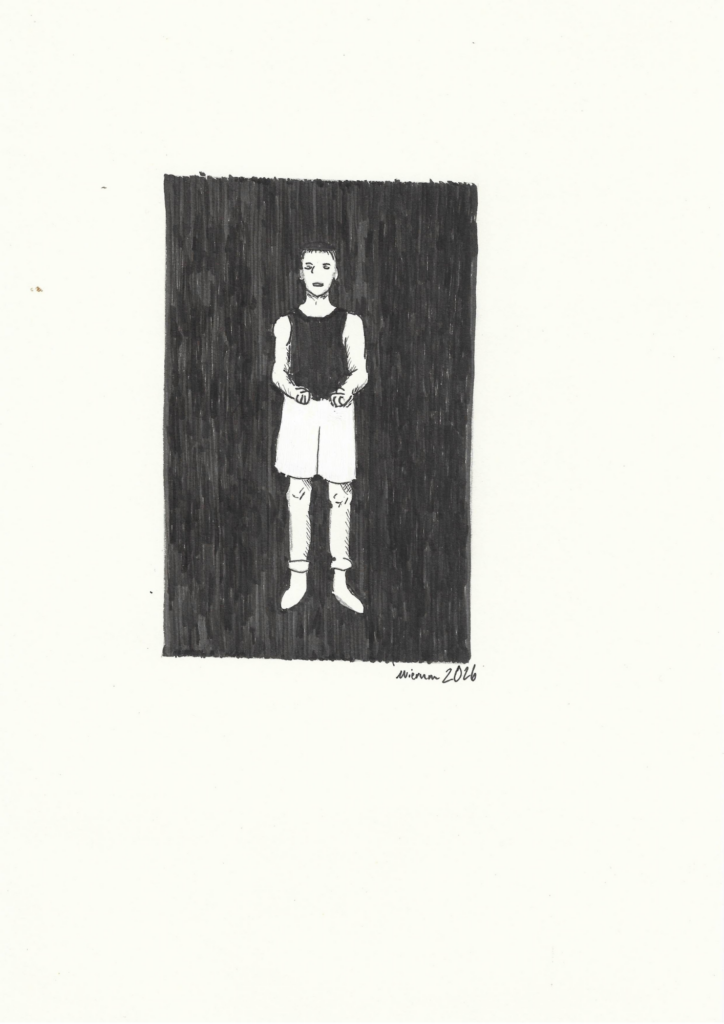
“How does everyone know what to do when on the road?” Orpheus asked innocently. “I mean, I’m shocked these machines don’t crash into each other all the time!”
They had been driving for about four hours now, and John Andestinic had been assaulted with such irritating questions as these since the moment they stepped forth from the Mill. Hrktos had excused herself, teleporting away on other business after leaving orders with John to bring the academy’s new ward to the city himself in the analogue fashion. Orpheus had caught sight of the sleek black 1935 Panoramique automobile with its rounded square frame and elegant seats almost immediately and was totally enraptured by a sight the likes of which he had never before seen, though it certainly reminded him in its shape of the horse-drawn buggies upon which the workers came and went in search of work. He was tempted to ask where the devil they would attach their horse when he noticed a veritable hum and a certain emanation of heat in the frontmost box of the carriage, so instead he asked, “What manner of creature propels your car Mr. Andestinic?” Unawares of the consequences of his actions, Andestinic answered freely, explaining that this was his automobile in which he had arrived with Archmage Hrktos and in which they two would now be departing for Canoniç (he pronounced the name of the city in the archaic way of the Orthodoxy, with the added ‘its’ ending, further piquing Orpheus’ curiosity about the man), and all the while explaining that the machine was propelled by an engine fuelled with the very energy which Whitecross Mill and other mills like it were charged with producing. Naturally, this answer led to a multitude of other questions which excited from the young hermit like undiscovered heirlooms just now revealed in a chest of drawers just now exposed after many years of being regarded with indifference; Orpheus examined each question slowly in his mind like a fresh jewel, its hues and refractions enveloping his attention completely, before he ventured forth to ask it of his new guide. Andestinic had been tasked with the harbouring of dewy-eyed recluses many times before, and several had not had such a familiarity with the concept of magic as this one, but nevertheless answering these long unreachable questions seemed distasteful to him in this instance. Perhaps it was on account of his earlier disagreement with his superior (indeed, Orpheus could detect some animosity in Mr Andestinic’s voice whenever Hrktos came up in conversation) or perhaps he was simply tired on account of his years of experience in the field. Still, nothing could stay the young Mr. Whitecross’s curiosity from reaching its realisation.
“Why should the Mill produce this energy, and how does it reach the car?” “Where did all the millers come from?” “Does Canonic really glitter with the light of a thousand stars each night?” “Who built Canon City? When and why?” And many other such questions.
Eventually, as they ventured deeper into the wet, toxic landscape of Canon City’s hinterlands in Thel, Orpheus began to desist from his interrogation in the interest of taking stock of the scenery. He endeavoured to memorise every metre of the region as they passed the grey mounds of sodden mud and the blackened trenches and craters which mired the land as they passed – remnants of recent wars which Orpheus was sure to enquire about at a later time when his priceless memories were not at stake of being left unsealed. He even took pains to note well the interior of the Panoramique’s cab, which was lined with luxurious velvet and dark leather, with wooden panelling and metal detailing to the effect of an almost royal level of comfort which could only have been dreamed about but hours ago. This comfortable interior served well to protect them from the extreme and absurd conditions just beyond the cab’s frame as they passed from the flooded wasteland of the south onto a severely dry mesa which proved equally as barren from the lower region separated by a ledge of only a few metres. The entire terrain of the hinterland, Orpheus was beginning to notice, was remarkably flat, only faltering in its uniformity by some ruined settlement or ancient funeral mound that rose up on the horizon like sleeping gods. As they travelled further north, such landmarks became more frequent, though no less unique, and the terrain began to sport a fashionably pale grass which grasped at the flat soil with greedy roots, its imperial expansion severed only by the sealed road upon which they drove. The road, which Mr Andestinic identified as the Interstate 3, inspired in Orpheus a hope for the grandeur of the city to which it led, as he imagined the broad boulevards which would criss-cross in an orderly grid between strong, stately buildings. Indeed, they soon found themselves driving through the winding streets of a small town named Villymisti, which, though modest, boasted some rather handsome looking brick buildings, including a dignified looking (albeit small) government building. When Orpheus expressed his astonishment at the immense size of the town’s advertised population (roughly ten thousand), John impressed its absolute scarcity in comparison to Canoniç with a smile that spoke volumes.
Further, the town was large enough that one or two automobiles drove its avenues, and once the third had zipped past with more speed than Orpheus had ever imagined possible, his latest question was prompted.
“There are certain rules,” Andestinic began to explain, “which everyone agrees to follow in order to make life easier. You understand?” Naturally, Orpheus asked about who made these rules and why they ought to be followed. “Well,” Andestinic replied, now somewhat more willing to answer questions for whatever reason, “the United States government creates the laws, and if everyone finds them agreeable, then they are enforced by the police. People like me, for example. Anyone who won’t follow the laws gets locked up, you see.”
“And what if they don’t want to be locked up? What if they escape?” Orpheus said, thinking now of the terrible fate of his Father. He was imagining the poor man trapped against his will in the clutches of this Hermeticus villain, and the thought of it was making him like the idea of imprisonment less and less.
John looked across at Orpheus at last, his eyes having been trained on the road as they exited the town and rejoined the highway. “There is a certain point when enough broken rules causes the government to decide someone ought to die for their crimes, son. Men and women who well and truly refuse to follow the rules are executed by the state.”
Orpheus seemed to think about this for a while, watching the cars drive past. Eventually, he turned to the policeman beside him and said, “so the law is only upheld by violence?”
Mr Andestinic chuckled at this, “Straight to the point there!” Then his expression darkened, and he seemed to recede into his thoughts as he drove. “Violence is the only thing the world answers to,” he said softly. He put a cigarette to his mouth and lit it with the end of his wand, clearly ending the conversation.
They drove in silence now, which would never bother Orpheus, whose entire childhood was silent. As much as he wanted to ask more questions, he of all people understood Mr Andestinic’s desire for silence. The overwhelming cacophony of the outside world was already overwhelming his senses, the thrum of engines and the shout of pedestrians distracting him from his peaceful thoughts. Sure, the workers at the mill were rowdy and the millhouse itself was restless in its engine song, but such sounds were familiar, and retreating into the further parts of the manor usually dampened their impact, while the noises of the streets were strange and exciting and inescapable from the cab, padded though it was. Orpheus attempted to focus his attention on his leather seat, counting each stitch that fastened the dermis to its cushion; the sensation was pleasant, and not entirely unfamiliar. He imagined the poor creature from which the skin had come – her name was surely Kern and she had certainly come from somewhere distant, in a bright and pleasant meadow with a white tree on the horizon. Though he had never witnessed a scene like it, he tried to picture what might go on in a place like this, how Kern would chew on that grass and how old Mr Whitecross would coerce her into a barn and stab her with a long, thin knife for the slaughter.
Orpheus jolted upright with a shiver, shaking off the odd thought. John cast a glance over at him.
“Got the heebie jeebies, hey? Come on, let’s get some lunch. I’m running on empty here!”
So, they pulled into a small dirt lot next to a round looking building with a neon sign that read, ‘Anna’s Diner.’ Inside the metal swinging door, the vinyl floors and oily counters were a novel experience for Orpheus, and he smiled with eager anticipation as they settled into a little booth. With the sun now well past its apex, the diner was beginning to quiet from the lunch period, though a few delivery drivers sat at the bar drinking colas. Someone had put on a toe-tapping little tune on the jukebox and the lady behind the counter, presumably Anna, was bobbing her head as she poured another soda for a customer. As he pulled into his side of the booth, Mr Andestinic pointed his wand at the rack of paper menus, calmly speaking the word ‘Ueτæheπ.’ After a moment of hesitation, the menus slid from the counter, apparently already on the brink of falling, and glided, as if by accident, across the diner and onto the table.
Naturally amazed, Orpheus exclaimed through his agape mouth, “Wow! Will I be learning magic like that in Canonic? I always asked Father to show me, but he was always too busy. He’ll be so amazed when he comes back and I can cast spells…” The young man almost trailed off into his own thoughts if he were not eager for more answers.
“Perhaps, but you’ll have to learn some theory first. Most bubblers – that’s a mage by the way – goes through his fair share of theory classes. Can’t get your wand to pop any more than a squeak without it.” Andestinic was speaking through a cigarette now, occasionally glancing up over his reading glasses as he perused the menu. He gave a dastardly smile, lips pulled tight over the white of the cigarette. “Take your pick of the menu kid, today’s meal is on Hrktos.”
In the wild overcorrecting hunger of any starved man, Orpheus resolved to order three mains and a dessert, with a soda to spare. He was nevertheless careful in his selection, taking sober stock of each item. Anna, who had come round from behind the bar to take their order, was patient enough to answer his questions as he ran his finger down the line. Eventually, Orpheus decided on a steak frites, a cucumber salad, a lamb wrap, and an apple pie. The hostess beamed as she marked down the request, finally turning to Andestinic, “My, the young man sure knows how to order!” She returned promptly with Orpheus’s soda and a coffee for John.
“Of course, you could take on any course offered by the Academy,” John was saying. “You don’t have to be a mage… Perhaps you might train to be an officer? Captain Hall would make a fine officer of you.”
“No,” Orpheus said, barely considering the idea. He took a sip of his soda, and quickly realised why Mr Andestinic had called mages ‘bubblers’ before – the fizz that he had felt when his assailant had cast off (and later when the Archmage had done the same) was identical to what he felt on his tongue as the sweet, dark, almost oily beverage swirled around his mouth. The young man decided he liked this feeling. Eager to get through the theory of magic as quickly as possible so as to begin casting spells, he leant forward and asked, “So, what can you tell me about magic?”
“Hm. Well, I’m no teacher, but my knowledge certainly isn’t stale. Magic isn’t quite what most people imagine it to be; there isn’t one way to approach it. Everyone connects to the aether in different ways, see. You ever been to church?”
Orpheus shook his head and John muttered something profane about Julius Whitecross the heretic. “I have read the Bible, though!” Orpheus put in, coming to his Father’s defence. This seemed to please Mr Andestinic.
“Better than most new students, I suppose. Well, think of it like the Trinity, then. Each of the three connect with God in their own way, right? Thelonius through his heritage, Kathan through his spiritual training, and Ibex through his rigorous study. They each connect to the same thing, but in a way that suits them. Magic is much the same; you have to meet it where it asks of you, but you can do so on your own terms while you’re at it. Understand?”
Before Orpheus could respond, Anna arrived with their meals. The steak frites was glistening with hot oil that enjoined with a sprig of rosemary to produce an aroma of unimaginable proportions; the cucumber looked fresh and crisp, and the entire salad was coated in a dark vinegar that was currently saturating into the pale green veins of the gorgeous fruit; the lamb wrap seemed (at least to Orpheus, whose salivatingly slow appreciation for each dish in this reasonably serviced roadside diner had received a brief glance from Andestinic, who then promptly returned to his sandwich) expertly crafted, each component serving its dutiful role in the production of a far superior whole bound by a thin prison of paper; finally, the apple pie, which was surely to be left last as the dessert portion, had a gentle sprinkling of sugar upon its densely packed surface that surely would resemble an early winter snowfall if he had only ever had the privilege of seeing one. The scene reminded Orpheus momentarily of a pleasant moment in his peaceful childhood when an old lady in bright stripes had brought for him at the house a little blueberry tart sprinkled with the same snowlike sugar that had delighted the senses as much then as the apple pie did now. Still, there was no time to dwell on such memories – the meal was afoot! The ravenous young Whitecross dined methodically, first selecting a cucumber and turning it about on his fork, then taking a well calculated bite out of the wrap (so that he might enjoy the maximum amount of flavour), then carving off a slice of steak and forcing a chip onto the end of the already stuffed fork. After each curated bite, Orpheus announced to Andestinic a name as he would at home with the elder Whitecross. After the third announcement (which happened to be ‘St Johannes of Hallad’) the detective held up his hand.
“Enough, what the devil are you saying, man?!”
Orpheus gave a quizzical look, “why, I’m simply describing what each flavour reminds me of.”
“Well, cut it out. People don’t like when a fella says odd shit at the table, okay?” Andestinic shook his head slightly, as if to rid himself of whatever odd sensation had come over him. His dark curls (now revealed from under his hat now that they were inside) shook with him, eventually settling down like the shadowed leaves of a tree in the night.
The young man shrugged, “I can’t help it if my words give you the hee-bee jee-bees, but fine,” he said, repeating the words he had first heard spoken only an hour ago with stilted inexperience. This elicited a chuckle from Andestinic, only shaking his head again as he returned to his meal.
About an hour further along the road, the landscape changed once again. Orpheus began for the first time to see picturesque meadows of green grass which stretched endlessly, dotted as it was in countless pockets of colourful wildflowers and the occasional house with a wraparound porch. The young recluse gasped aloud when this scene first came into sight, its pleasant border meeting the very edge of the low red mesa which they were just now dismounting on the shallow decline of the Interstate 5. Somehow, not a grain of sand breached the edge of the desert only metres away and Orpheus felt that the atmosphere changed slightly as they passed over the threshold of this new, impossibly nice realm. From time to time, a red column of sand was carried on the wind far above, eclipsing the white clouds like an army of tiny crimson soldiers returning to the city from the bloodshed of war. Still, not even a mote of red was detectable on the surface of the bluish-green plain besides the poppies which littered the field like pools of the spilt life-force of generations past.
Andestinic glanced about him as he drove, perceiving Orpheus’ astonishment with this new, previously unfathomable vista.
“Wait ‘til you see the Windy City; Canoniç will be totally different again to anything anyone has seen.” The tenured detective always took pleasure in this moment, when people finally got to see the beauty of the home he had come to love. It made the bothersome questions worth their while.
“But what is it, Mr Andestinic? How is it possible that these hills aren’t desert?”
“This region, called Efthea, is under the protection of an exceptionally made blessing of meadows. Damn good fizz right there. Rich folk prefer to live here over the deserted wastelands back before. Only problem is that the blessing uses up a heck of a lot of ambient magic in the atmosphere.”
“So, all the energy at the Mill was being processed… for this?”
“In some cases, yes. Most of the magic on the continent sits on the wind like sand. It all ends up in the Windy City eventually,” John said with a shrug.
After an uncharacteristically picturesque few minutes, they passed beyond Efthea (its central town was visible downstream from a river overpass, its glistening brass peaks and blue-capped houses just as resplendent as the surrounds) and up a sloping drive along a low black cliff which saw a return of the same marshy, grey wasteland that was familiar to Orpheus’s eyes. The surface of this terrain, however, was coated in a thin film of red sand that had travelled from beyond the blessed fields on the spirit winds. The effect of this red coating was a sunset-like appearance as the crimson light reflected off the pools of murky peat. From this new vantage at the edge of this wet field (where the occasional rice paddy could be spotted, and a few rice farmers raised their bent heads to observe the veritable queue of automobiles which trafficked along the highway in anticipation of what was ahead), one could observe just above the treeline of the mangroves that densely held back the flat terrain the metal peaks of the towering buildings which bundled together with militant order. Further, as they left the sanctuary of Efthea, the wind returned to the landscape, now stronger than ever, so that the tough frame of the cab began to shudder with animalistic fervour, adding to the epic, almost somatic effect which came over Orpheus as the city of the world came into view. Andestinic leant over the steering wheel and pointed at the spire of one building which reached higher than any other, its golden leaves seemingly touching the clouds like the crowning fronds of a thyrsus, “That one’s the Sauer building, the tallest building in the world.”
He leant back into the driver’s seat, content to enjoy once more Orpheus’ astonishment.